
Miss Linn Discharge Curve
Volts or Amp hours?

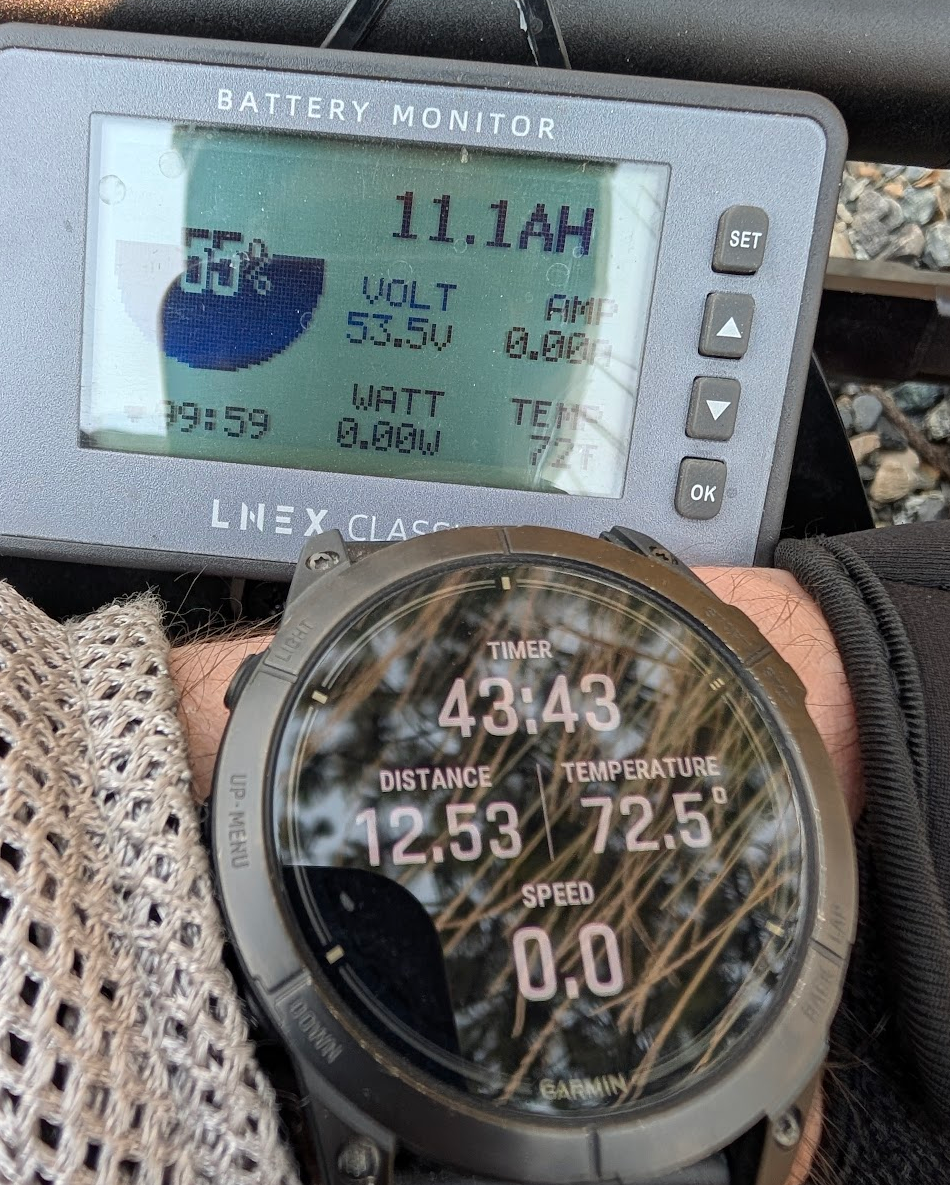
I was complaining - for all the zero good that ever does - to Dan and Gary about the lack of an e-anything trip computer that would look at either battery volts or amp hours flow through a shunt and cross it with GPS data and save me the math by displaying the desired/needed/wanted number of distance to go till empty
This led Dan to wonder if I really needed the shunt or if I could just go by battery voltage?
Honestly, that EXACT question has been on my mind a LOT since before buying the meter with the shunt. If you missed it, you can read about it here: https://thebaldgeek.net/miss-linn-gas-gauge/
After a bit of back and forth we decided the best thing for me to do is just gather the data, plot it, and thus answer the question... Volts vs Amp Hours?
Gary made the comment about no headwind and no hills. Point was taken, try and keep it as even as possible.
The trail long the Spokane River is the best I got. Its somewhat flat and pretty sheltered from the wind for the most part.
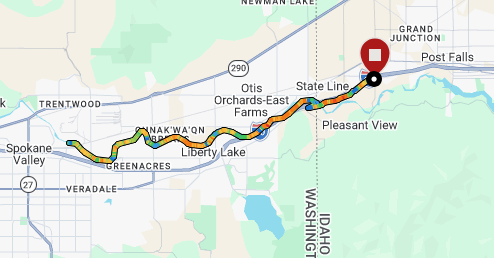
Only 175 feet change in elevation overall. Yes, bit of wind, but as I said, the trail is mostly sheltered by trees, houses and the path the river has cut through the hills most of the way - eh, its better than nothing. I really want the data because I really want to try and get one long ride in before winter, which simply means, I ain't waiting for a windless day. A few days ago, I just sent it.
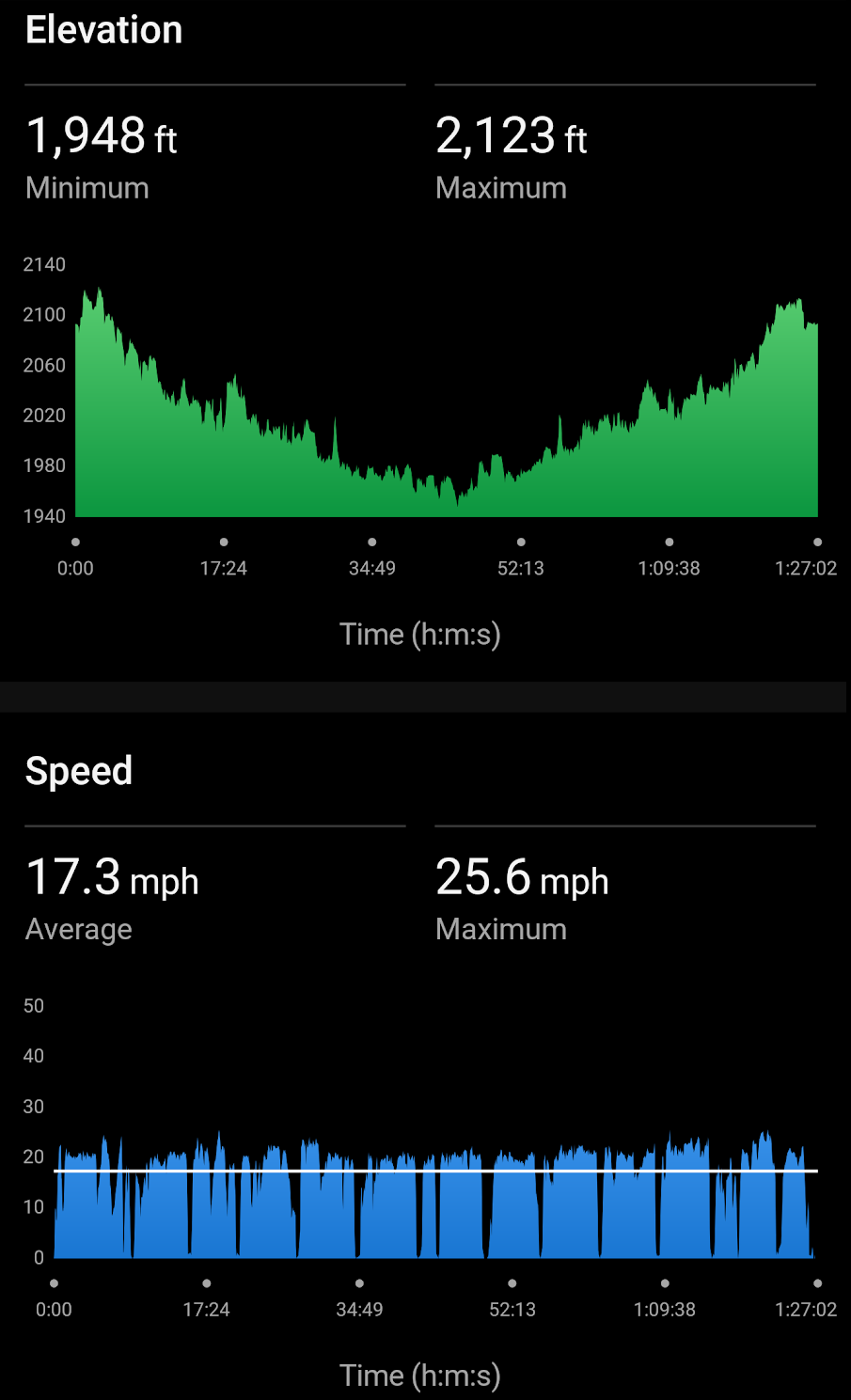
You can sorta see the even drops in speed every two miles when I pulled over and got a photo of the distance, amp hour meter and battery voltage.
I focused on keeping the speed even - top of about 22mph. Wanted to keep it at an average of 20mph for the most part.
The more I ride Miss Linn, the more I am the most comfortable between 22 and 25.
20mph is 'dangerous' as its tedious and my mind does not stay focused on riding. 18mph or slower is downright painful.
Small point I want to mention. Dan, Gary and I went around and around in hand wavy circles a fair bit about if I should leave the '20Ah' capacity programmed into the meter or if I should change to to match my actual usable amount of 18Ah.
We never really got a clear consensus on that one.... And franky, if we decide to NOT use a shunt, I CAN'T program in the capacity, so its a moot point.
Let me just go on record about how much it really broke my flow having to stop every 2 miles. Amazingly annoying.... Like, interestingly so.... I suspect my buddies enjoy torturing me anyway they can, so here we are... Me complaining and them laughing.
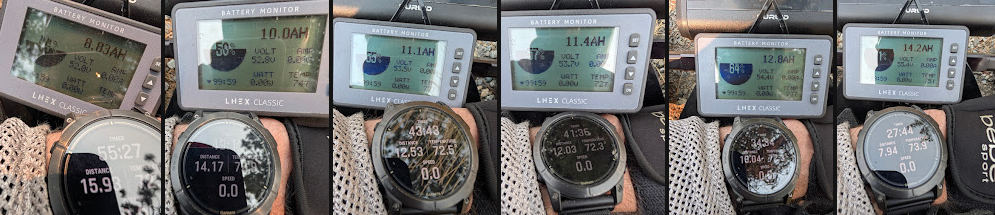
Once back home, I put the 2 mile readings into a graphing app and here is what we get.
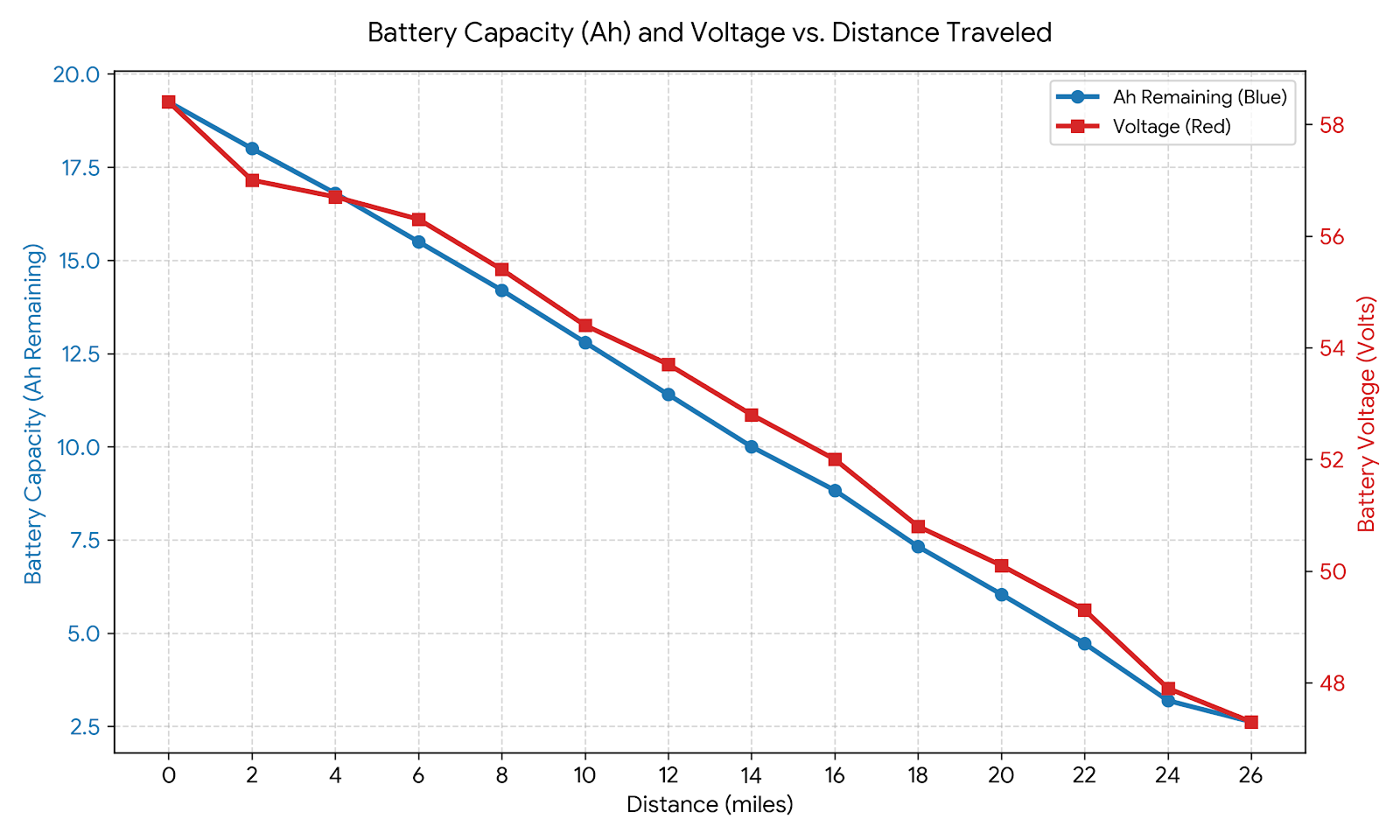
So, the saddest takeaway from that bit of graph work is that I did not need to spend the extra money on the meter with the shunt, nor spend the good chunk of time it took for me to install it.
The battery voltage alone will be just fine for a fuel gauge.
The other somewhat surprising fact is just how linear it is.
For some reason Dan thought that the first half (or so) would be at a different gradient than the last half (or so). <shrug>
Given the steady speed and mostly flat path, I cant see why any part of the slope would change?
POST PUBLISHED EDIT: I think Dan was thinking about the last 10% of the discharge of a LiPo battery is like a cliff. If so, this sort of loops back to our circular discussion about if I should put 18Ah or 20Ah in the discharge meter.... 18Ah means that when the battery is 'flat', ie before the real roll off in discharge, it shows the rider (ie ME) that we have 0% left in the tank - really we have about 4-5% if I take it super easy. Vs if I put 20Ah in, when it shows 9%, Im already starting to head off the discharge curve cliff.
Because this data gathering ride did not go close to the 10% cliff edge, the graph showed a nice linear discharge curve, just as expected for the load and battery chemistry.
If you are interested in the raw data... Here it is.
| Distance (mi) | Ah Remaining (Blue) | Voltage (Red) | Notes |
| 0 | 19.25 | 58.4 V | Estimated full charge (Start from car park) |
| 2 | 18.00 | 57.0 V | |
| 4 | 16.80 | 56.7 V | |
| 6 | 15.50 | 56.3 V | |
| 8 | 14.20 | 55.4 V | |
| 10 | 12.80 | 54.4 V | |
| 12 | 11.40 | 53.7 V | |
| 14 | 10.00 | 52.8 V | |
| 16 | 8.83 | 52.0 V | |
| 18 | 7.32 | 50.8 V | |
| 20 | 6.04 | 50.1 V | |
| 22 | 4.72 | 49.3 V | |
| 24 | 3.19 | 47.9 V | |
| 26 | 2.62 | 47.3 V | Finish was not exactly 26 miles. Get over it. |
Key bit of info for the possible maybe future trip computer: 0.64 Ah per mile @ 20mph.
Given all this, I pretty sure I am going to remove the shunt for the amp hour meter next time I open the guts of the board (probably when I fit the external power feed socket).
I might/will look for a daylight visible/ bigger font voltage only display, or just use the 5 bar one in Miss Linn's remote as it seems like it really is accurate enough, at least until I make my e-ink trip computer over the winter.